New here, sorry for lots of questions.
I don’t suppose the PSU from the 2022 Model 10 re-issue is available to retrofit to gain the apparent improved stability for 220V users?
What about the Synth-werk model 10 PSU, perhaps that could be used?
Alternatively, are the Synth-Werk 901’s any better or would the moog PSU render them poor too.
You can use any PSU that provides the needed rails, DIY or brand, it doesn’t matter. The times that Moog products need some PSU noise to work properly are over. Concerning the 901: When I cloned my own System 55 back in that times I did some research on Moog circuits. In that days Gerhard Mayrhofer wanted to launch Synth-Werk and asked me how to design his 901 clone. So I exlained the specials of the original 901 circuit to him which makes the sound of this VCO so unique and wonderful. So the chance is great to obtain authentic 901 modules from him.
That’s really interesting, thank you. I’m just about to collect my model 10 so I’m learning all I can and preparing myself for tuning issues.
The 2022 reissue said “Model 10 now has improved calibration and tuning reliability, with this current production model holding tighter calibrations with little variance.” Elsewhere on this forum someone was told that related to the PSU for 220V versions. If that’s true then perhaps a new PSU will help.
Is there is a definitive tuning guide for the model 10 somewhere? I’d love to see that.
thanks again for your help.
Oh, the original circuit (from 1969 or so) used diode arrays for tempertaure drift compensation, without any heater functionality or similar. You adjust it, it stays stable for some time, and starts drifting again. It did and does not work. Professionals like Isao Tomita complained about that.
But even Bob Moog accepted that and changed the temperature compensation to usage of transistor arrays, like the Prodigy, the Mini and so on use.
But this is still not perfect. Prodigy users complain about that.
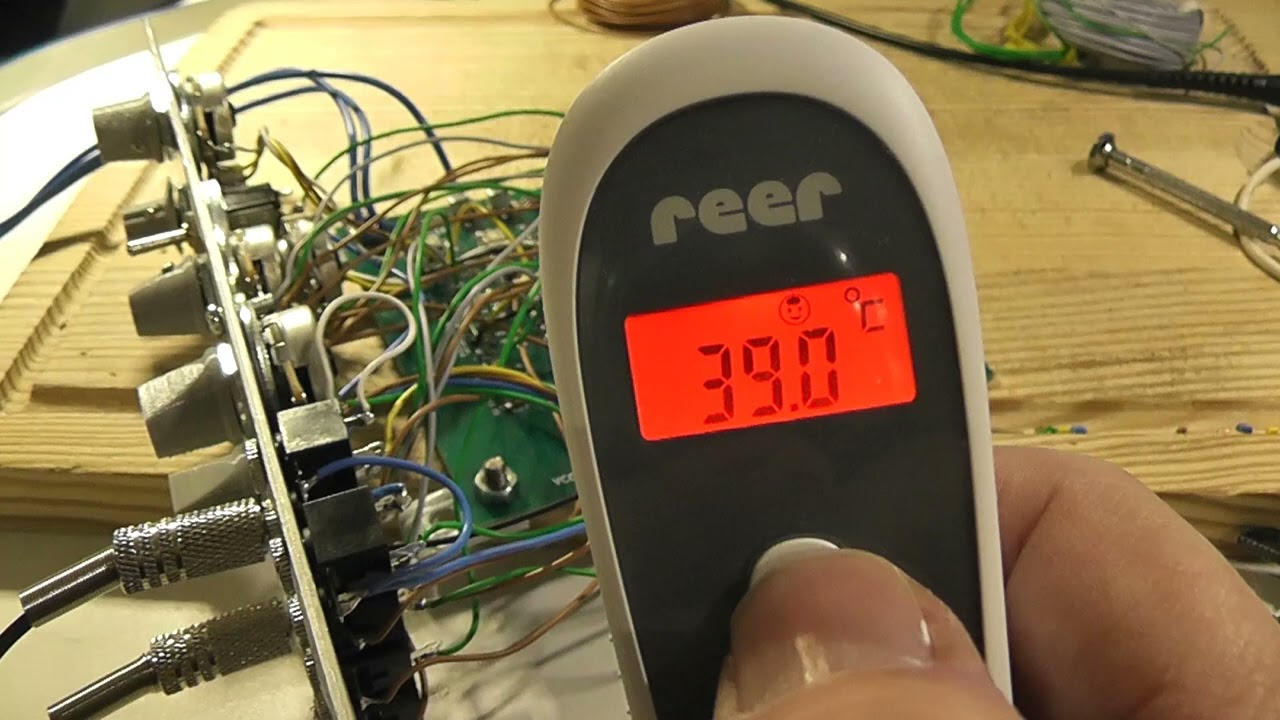
When I cloned the Mini VCO (which now is the working horse in my System 55) I changed to a heater approach. Now I take over control over the process, by determining the body temperature of the transistor array independent from outside temperature, up time, enclosings etc. See my heater setup for my Oberheim SEM VCO clone:
But all new 901 variants are much better than the original anyway.
Concerning the PSU: The only thing I can imagine is that there is noise / rubbish voltages on the GROUND line with cheap PSUs, or even worse instable rails, and those effects change tune and scale randomly. There a high quality PSU will help.
Next is what I consider as the worst Moog decision ever: Using an S-TRIG instead of a V-TRIG. When I cloned the original keyboard I cloned the S-TRIG functionality as well to be as close to the original as possible, but I saw the problem immediately: all currents of modules like EGs or others, which use S-TRIG, pump their voltage into a poor, single transistor in the keyboard circuit which shorts the voltage to ground. The problem is obvious. By usage of too many modules like that the GND level can be polluted, which leads to tuning and scaling issues of VCOs as well.
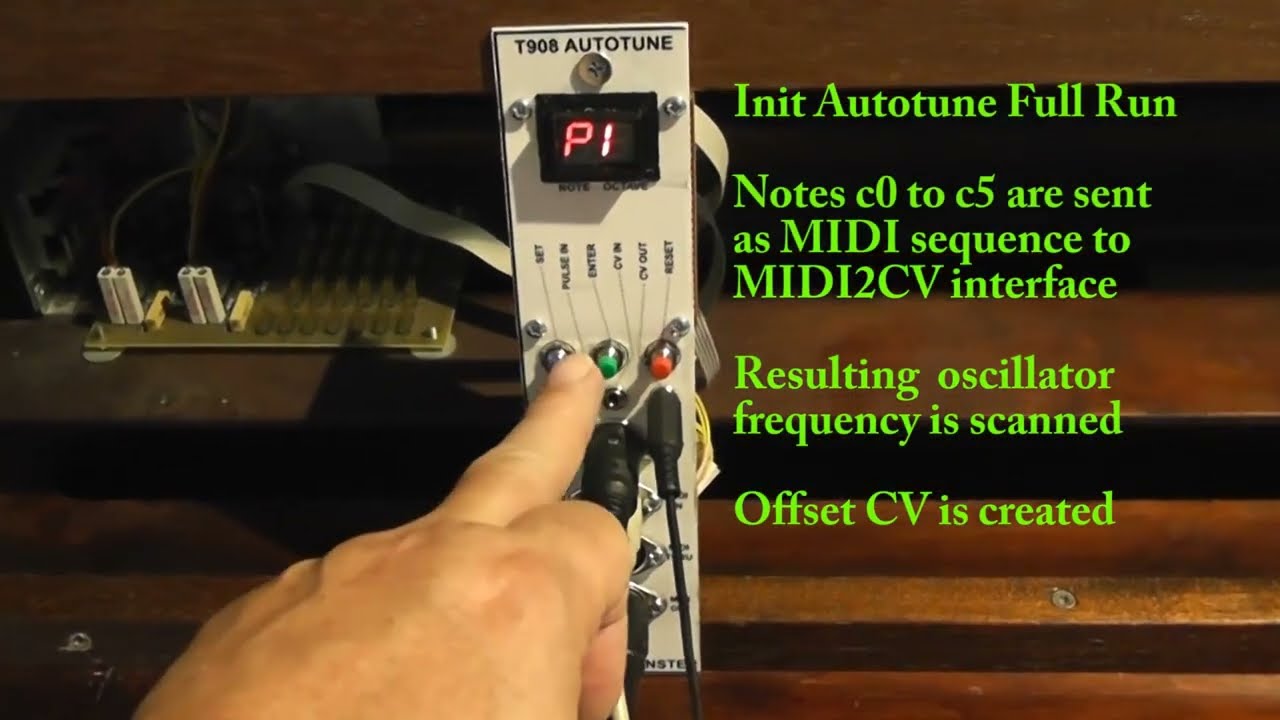
But as I wanted to keep my 901 VCOs anyway I decided to heal the symptoms instead of the disease: I developed an Autotune Module for Moog Modulars. It can be added to any Modular and takes control over any drift of tune and scale:
Because the sound of the 901 is the best of all VCOs I ever heard due to its imperfect waveshaper which adds some nice buzz to the waveforms I like so much.
So the most important point for me concerning new 901 VCOs is: Did they keep the waveshaper??
analogmonster I really appreciate your reply. Fingers crossed I will be the proud owner of a model 10 tomorrow.
Hi analoguemonster,
Now I have watched your videos I have a couple of questions about auto tune.
How does auto tune allow for detuning?
I thought the problem with 901’s was the drift over time and localised heating changes. How does auto tune keep everything stable while I’m playing and it is warming up?
Oh, that would be cool! The Model 10 is a wonderful system. I admire the concept since I saw my personal hero Isao Tomita working with the Model 10 as part of his studio. And I think he had more than one. I never could afford one.
That are two different issues. The detunig over time is quite static. When I calibrated my 901 clones it lasted for several weeks. So an Autotune setup at a session start is enough.
If there is a fluctuation during a session, you can repeat the Autotune operation like I show in the video. The prior Autotune results are kept as iteration base, so the Autotune run is quite fast.
If you need a continuous tune tracking, you can switch to “online” operation mode of the Autotune module. In this mode each key stroke is scanned in parallel to your play, and the voltage offset is adapted.
On heavy fluctuations during your play you can hear the tuning procedure on long notes though, so I remembered my mainframe programming times in my IT job where continuous tasks were performed in the background, so currently I am working on a software version (my T908 Autotune module is microcontroller based) which performs continous background tuning on silence gaps during your play, like the mainframes did in the old times. But this is under development. For keeping a 901 stable the current operation modes of the T908 work perfect.
Is the T908 available to buy?
Yes, it is. On interest please contact me per mail at carsten@analog-monster.de