Can any of you guys with synth repair experience suggest a good way to repair a PCB trace that has broken/lifted off?
I’ve been replacing some slider pots in my SH-09 –
(Yes, I’m talking about a Roland. Please don’t throw shoes at me…  )
)
– and this has occurred in a couple of places, right at the terminal (thankfully). I can join the trace and the terminal with a little jumper wire and some solder – it works – but it’s not pretty, and I’d like to be as thorough as possible.
Also, is this just due to age or can I prevent this? Fwiw, I’m only using a 30-watt soldering iron.
Any ideas?
Can’t help you, but my first synth was an SH-09 (my second was a Moog Rogue before i get flamed down  ). My third was an OSCar
  .
.
To be honest though, that era Roland was built like a tank (much better construction than the Rogue), so i’m surprised you have a problem.
You’re repairing it like most techs probably would.
But to avoid this in the future you may need a hotter iron or better desoldering tools.
If you’re on a budget and can’t afford a true vacuum pump desoldering station, I’d recommend using solder wick.
I personally think desoldering bulbs and hand-held plunger pumps provide the worst desoldering results possible.
Long (ugly  ) story short, the first time I ever worked on a double sided plated through circuit board I was hopelessly trying to desolder some chip sockets. Solder wick and my cheapo Radio Shack solder suckers weren’t getting it and I watched in despair as the traces started to lift and crack!
Then on a whim I tried one of these  :
:
http://www.radioshack.com/product/index.jsp?productId=2062731
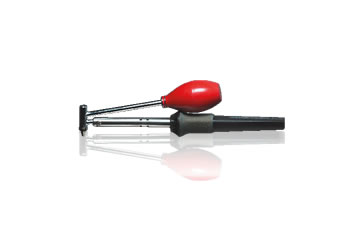
Best $7 I ever spent (15 years ago) and I think I’ll buy a backup soon since they are only $11 now. Works great for occasional use at least!
That’s an interesting desolderer- great tip!
While it has a bulb, it doesn’t have the horrible teflon end most bulbs do.
It also heats while it’s sucking up the solder.
I wouldn’t want to desolder a 40 pin IC with it, but the price is definitely right.
Just a replacement tip for the Hakko desolderers I use costs about that.
+1 on the rat shack desolderer! I too use one of these, and it’s the second best investment I’ve made! For the larger desoldering projects, like 40 pin IC’s, I use good old fashioned solder wick. That’s the first best investment I’ve ever made. I bought a hundred bucks worth of the stuff eight years ago from Chester Electronics in Kenosha Wisconsin. Have about four years left of the stock figuring current rate of consumption.
I use good old fashioned solder wick. That’s the first best investment I’ve ever made. I bought a hundred bucks worth of the stuff eight years ago from Chester Electronics in Kenosha Wisconsin. Have about four years left of the stock figuring current rate of consumption.
Just an observation-
Solder wick is copper and over time it oxidizes a bit.
This can make old solder wick difficult to use.
You can detarnish it with Tarn-x or other suitable chemical.
Liquid solder flux can also help.
Kevin, you’re right about the oxidation. Which is why I keep it in the plastic spool thing, tightly wound. I’ve discovered that only the first couple inches of each unused spool needs to be fluxed each time I switch spools. This seems to defy logic, I know, but that’s been my experience so far. 
What kind of problems did you have with the spring loaded solder suckers? I’ve used them for years, and they’ve always worked for me.
mayidunk wrote:
What kind of problems did you have with the spring loaded solder suckers? I’ve used them for years, and they’ve always worked for me.
Yeah, me too, for the most part. I ended up using both for this project – the spring-loaded sucker for the getting up most of the solder, and the wick the pick up the remaining traces. The teflon tip is annoying though (only in that it gets melted over time). Kevin, you probably nailed it – i need a better iron. Come to think of it, though, I changed out my soldering tip in the midst of all this… but the problem happened again anyway.
Mr Arkadin wrote:
To be honest though, that era Roland was built like a tank (much better construction than the Rogue), so i’m surprised you have a problem.
Funny you mentioned that. The Roland is a rock solid machine. But I did this same operation on an MG-1 (practically a Rogue)… no problems! Also, the PCBs in the Roland are covered with this weird shellac or something… which dissolves in alcohol. Makes cleaning up after soldering quite a doozy.
Thanks, guys!